

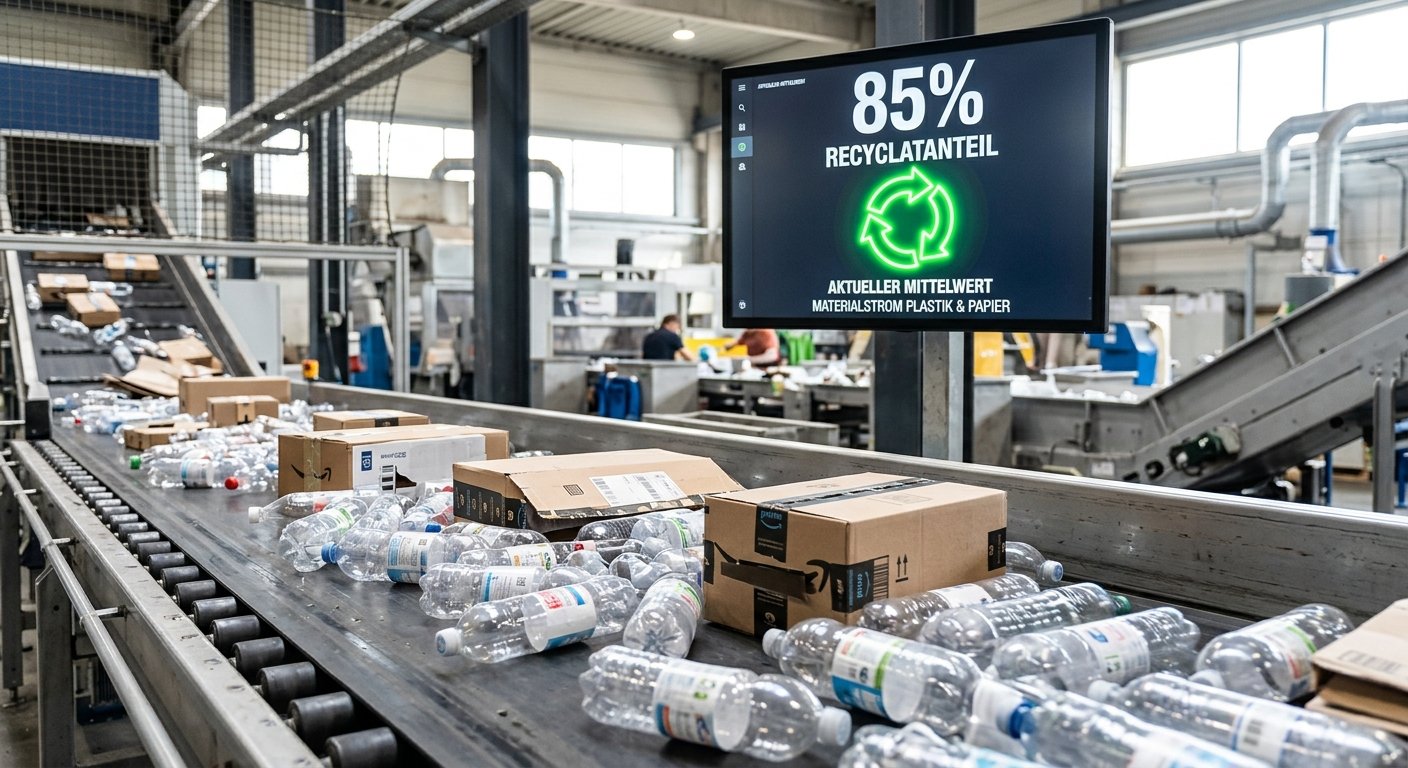
When you drop your empty soda bottles, plastic bottles, and cardboard boxes into a recycling bin, a tracking process begins. As environmental consciousness rising around the world, understanding the exact percentage of recycled material in new goods becomes vital. This measurement is known as Recyclatanteil (recycled material proportion), and a higher recyclatanteil score greater than zero indicates that a item actively supports a circular economy. Incorporating recycled content benefits the planet by ensuring less landfill waste and allowing shoppers to make informed purchasing decisions. This guide explores the structure, calculations, regulations, and industries that define this metric.
What is Recyclatanteil? (Definition and Context)
Recyclatanteil (recycled material proportion) is the percentage by weight of recycled materials contained within a product or packaging unit. This metric determines the precise volume of secondary raw materials (Sekundärrohstoffanteil) used during manufacturing compared to virgin resources. The environmental impact of any container, textile, or electronic device is tied directly to this ratio.
As the environmental consciousness rising globally, tracking the Recyclatanteil Plastik (plastic recycled share) and Recyclatanteil Verpackung (packaging recycled share) has moved from a voluntary corporate goal to a legal necessity. In Germany (Deutschland) and across the European Union (EU), the Packaging Act (Verpackungsgesetz) and broader circular economy frameworks place strict focus on this value. A high recyclatanteil score greater than zero helps reduce resource consumption and lowers the demand for virgin resources. For businesses, displaying a high percentage on product labels allows them to demonstrate sustainability commitment and attract eco-conscious customers.
You Might Also Like: Book32
The Great Divide: Recyclatanteil vs. Recycling Rate
Understanding the difference between Recyclatanteil and the recycling rate (Recyclingquote) is necessary to avoid greenwashing and misaligned sustainability data. These two metrics measure entirely different stages of the material life cycle.
-
Recyclatanteil: This measures the input side of production. It indicates the actual amount of recycled material (Anteil recycelter Materialien) present inside a finished product. For example, if a plastic bottle has a Recyclatanteil of 80%, four-fifths of its total weight comes from collected and processed waste.
-
Recycling Rate (Recyclingquote): This measures the output side of waste management. It indicates how much of a specific waste stream is collected and processed into new raw materials at municipal facilities or material recovery sites, regardless of whether those materials end up in a specific new product.
A packaging item can be 100% recyclable (meaning it has a perfect potential recycling rate), but still possess a Recyclatanteil of 0% if it was manufactured entirely from new, virgin resources. True circular economy supports both high recyclability and high recycled material usage.
Types of Recycled Content: PCR vs. PIR
Not all recycled content shares the same origin. The raw materials used to boost the Recyclatanteil are divided into two main categories based on where the waste was intercepted during material recovery.
Post-Consumer Recyclate (PCR)
Post-Consumer-Rezyklat (PCR) consists of waste materials generated by households, commercial businesses, or institutional end-users. This includes items thrown into a domestic recycling bin, such as used newspaper, aluminum cans, glass jars, and plastic packaging. Utilizing PCR offers the highest environmental benefits because it directly drives landfill diversion and cleans up consumer waste streams.
Pre-Consumer Recyclate (PIR)
Pre-Consumer-Rezyklat (PIR), often called post-industrial scrap or industrial byproducts, comes from waste diverted during manufacturing processes. This includes fabric scraps from garment factories, plastic trimmings from injection molding, or excess paper pulp from mills. PIR excludes materials that are directly reworked within the same industrial process that generated them. While valuable for resource efficiency, processing PIR is generally less complex than cleaning mixed consumer waste.
How to Calculate Recyclatanteil: Formulas and Math
Calculating the precise Recyclatanteil of a product requires knowing the exact weight metrics of the materials involved before product launches. The calculation is based on mass balance and requires consistent units of measurement.
To calculate the percentage, use the following mathematical formula:
Practical Calculation Example
Consider a standard beverage container. The total weight of the finished container is 200 grams (0.2 kg). During production, the manufacturer utilizes 50 grams (0.05 kg) of post-consumer plastics and 150 grams (0.15 kg) of virgin plastic resin.
The product has a confirmed Recyclatanteil of 25%. For complex goods containing diverse components like metals, glass, or paper, manufacturers must conduct a thorough waste auditing process across supply chain audits to verify the weight of each secondary material stream before carbon accounting can be finalized.
A Manufacturer’s Guide to Boosting Recyclatanteil
To successfully increase the Recyclatanteil (Recyclatanteil steigern) in industrial production lines, companies must take structured operational actions.
-
Execute a Material Audit: Analyze your current material composition to identify where virgin components can be systematically substituted with secondary raw materials.
-
Partner with Certified Suppliers: Establish transparent agreements with material recovery facilities that guarantee a steady stream of high-quality, verified recyclates.
-
Optimize Production Equipment: Adjust manufacturing machinery, such as extrusion lines or molding systems, to process the specific physical traits of recycled resins or fibers without breaking.
-
Engage in Packaging Redesign: Redesign packaging models to favor mono-materials over multi-layer plastics, ensuring the finished goods can be easily recycled again to maintain a closed-loop system.
Overcoming Common Challenges with High Recyclatanteil
While the benefits of using recycled content are clear, manufacturers face specific technical and regulatory hurdles when trying to maximize these values.
-
Inconsistent Material Quality: Recycled resins and fibers often display variations in color purity, strength, and processing traits compared to virgin stock. Advanced sorting technology and modern processing techniques are required to stabilize incoming batches.
-
Regulatory Compliance and Food Safety: For materials in food service sectors, strict laws regulate plastic materials in direct food contact. Achieving a high Recyclatanteil Kunststoffe (plastic recycled share) in food packaging requires specialized chemical recycling or decontamination processes to meet strict health codes.
-
Supply Chain Logistics: Securing a consistent volume of clean, sorted waste can be difficult. Disruptions at collection points or municipal sorting centers can stall production if a company relies solely on one source.
-
Fluctuating Production Costs: High-quality rezyklat can sometimes be more expensive to source than virgin resources due to the intensive washing, sorting, and testing required during material recovery.
The Global Landscape: How to Verify Real Recycled Content
To prevent fraudulent sustainability claims, companies must use third-party certifications and chain-of-custody models to verify their actual Recyclatanteil. Global regulations require clear proof of material origins during supply chain audits.
Key Certifications and Standards
There are 3 main international standards used to certify recycled content:
-
Global Recycled Standard (GRS): A holistic international standard that verifies the precise percentage of recycled material in products, while tracking social, environmental, and chemical practices during processing.
-
Recycled Claim Standard (RCS): A chain-of-custody standard used to track recycled raw materials through a supply chain, often deployed when checking specific textile or plastic components.
-
ISO 14021: This standard governs environmental labels and declarations, setting strict rules on how a company can state its Recyclatanteil Definition to consumers without misleading them.
Traceability Models
Verification relies heavily on the mass balance model or segregation model. The mass balance approach tracks the total volume of recycled material entering a production system and allocates it accurately to finished products, making it useful in chemical recycling and large-scale plastic processing.
Industries and Products Utilizing Recyclatanteil
Modern manufacturing sectors are increasing their usage of recycled materials to lower their carbon footprints and satisfy consumer demand for green practices.
Packaging and Consumer Goods
The packaging sector uses recycled materials extensively. Millions of recycled plastic bottles, cardboard boxes, and paper pulps are turned back into everyday containers. Beverage brands are working toward a 100% Recyclatanteil for PET bottles to eliminate the use of virgin fossil fuels.
Construction and Infrastructure
At construction sites, resource efficiency is achieved by utilizing recycled concrete and recovered metals. Reclaimed wood and structural steel help reduce energy consumption during building phases while keeping heavy demolition debris out of local landfills.
Fashion and the Textile Industry
Circularity in fashion relies on turning waste into wearable products. The fashion industry uses recycled fiber fabrics sourced from old plastic bottles and fabric scraps to build sustainable clothing lines. This process reduces reliance on virgin cotton crops and petroleum-based polyester, preserving water and land resources during textile recycling.
You Might Also Like: Telemetryworld
The Future of Recyclates: Advanced Recycling Technologies
To push past the limits of traditional processing, mechanical methods are being supported by new chemical recycling frameworks. Standard mechanical grinding often degrades plastic polymer chains over time, limiting how many times an item can be reused.
Advanced chemical recycling breaks down complex plastic polymers into basic monomer blocks. This technology enables the processing of mixed, contaminated, or multi-layer plastic waste that mechanical sorting facilities typically reject. By removing dyes and impurities, chemical recycling creates secondary materials with the same physical traits and color purity as virgin resources.
These technical innovations ensure that the target Recyclatanteil in automotive parts, consumer electronics, and medical packaging can increase significantly over the coming decade, creating highly efficient closed-loop systems.
Conclusion: Beyond Recycling, Towards True Circularity
Tracking and increasing the Recyclatanteil (recycled material proportion) is an essential strategy for businesses wanting to thrive in a circular economy. Knowing the precise ratio of recycled material inside packaging, clothing lines, or electronics helps companies lower their resource consumption, reduce production costs, and attract eco-conscious customers.
While issues like volatile material quality and complex supply chain logistics still exist, deploying advanced sorting technology and securing clear certifications allows companies to successfully fulfill their sustainability commitments. Moving forward, optimizing the Recyclatanteil ensures that consumer goods protect the environment, lower landfill waste, and preserve natural resources for future generations.