

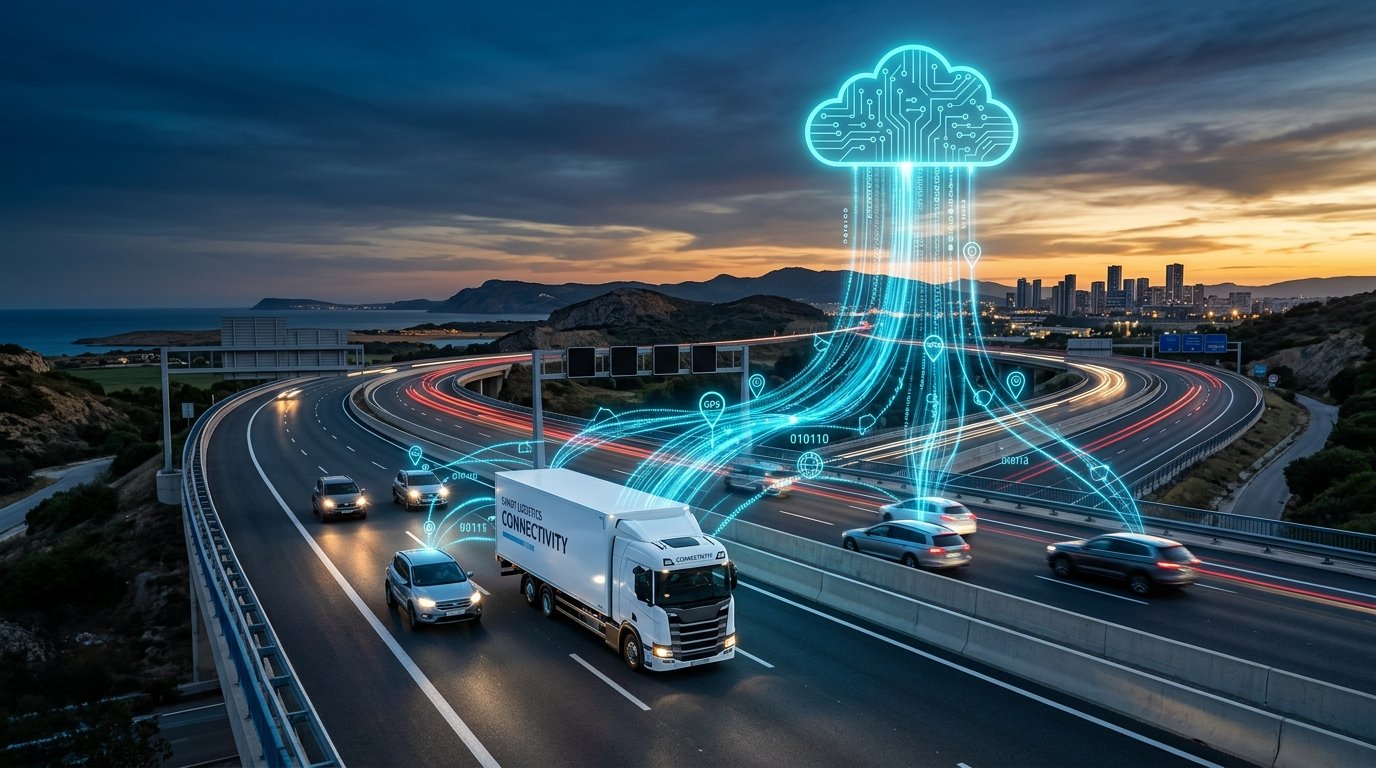
Telemetryczny in automotive means remote measurement, data transmission, and analysis for vehicles. A car, van, truck, or race car collects data from sensors, a Global Positioning System (GPS) receiver, an akcelerometr, and onboard controllers. A modem or moduł telemetryczny sends that data through pakietowa transmisja danych, often with telemetryczne karty SIM, statyczna adresacja IP, and a private Access Point Name (APN) such as APN telemetria.pl. The result is monitorowanie pojazdów w czasie rzeczywistym, better service planning, and faster decisions.
In practice, a Telemetryczny setup supports systemy zdalnego monitorowania, a system telemetryczny dla floty, optymalizacja tras przejazdu, redukcja kosztów utrzymania floty, zdalne zarządzanie samochodem, and wykrywanie niebezpiecznych zachowań kierowców. The same logic works in fleet management, motorsports, workshop diagnostics, and regulatory reporting. The core parts stay the same: sensors, a telemetryczny rejestrator danych, a communication module, secure data transmission, and telemetryczne oprogramowanie analityczne.
You Might Also Like: Simbramento
Understanding the Telemetryczny System
A Telemetryczny system is a remote vehicle measurement and reporting system. The system reads physical or digital values, sends the values over a transmission channel, stores the records, and turns the records into alerts, reports, or control actions.
A typical automotive Telemetryczny stack has 5 parts:
- Czujniki i źródła danych
These include a czujnik telemetryczny, engine sensors, fuel sensors, battery sensors, tyre-pressure sensors, temperature inputs, a GPS receiver, and a cyfrowy tachograf. - Warstwa zbierania danych
This layer includes a telemetryczny rejestrator danych, a modem telemetryczny, or a moduł telemetryczny connected to the Controller Area Network (CAN), On-Board Diagnostics II (OBD-II), or external inputs. - Kanał transmisyjny
The channel can be wireless or wired. A public-road fleet usually uses cellular transmission. A test bench or race workshop can use a kabel telemetryczny for direct, stable transfer. - Platforma analityczna
Cloud software or local software performs telemetryczny monitoring danych, telemetryczna analiza sygnałów, and report generation. - Interfejs użytkownika
A monitor telemetryczny, panel telemetryczny, or mobile app shows live status, alarms, route history, and maintenance tasks.
A Telemetryczny system is not only a tracker. A Telemetryczny system can support diagnostics, a telemetryczny system sterowania for selected vehicle functions, and telemetryczny nadzór obiektów around depots or parking areas. The same design principles appear in telemetria pojazdów, telemetria przemysłowa, telemetria medyczna, and telemetria satelitarna.
That wider use explains why people search for terms such as telemetryczny w logistyce, telemetryczny dla transportu, telemetryczny w przemyśle, telemetryczny dla rolnictwa, telemetryczny w budownictwie, telemetryczny dla energetyki, telemetryczny w hydrologii, and telemetryczny w medycynie. The hardware changes, but the core model stays the same: measure, send, store, analyze, act.
How Does Telemetryczny Work?
It works by collecting vehicle data, packaging the data, transmitting the data, and turning the data into actions.
Here is the process in 6 steps:
- Measure the right parameters
Sensors perform telemetryczny pomiar parametrów such as speed, coolant temperature, fuel level, voltage, engine load, vibration, and brake events. Fleets often track telemetryczny pomiar ciśnienia and use telemetryczne czujniki temperatury for cargo or battery monitoring. - Read and normalize the signals
The moduł telemetryczny reads data from CAN, OBD-II, analog inputs, digital inputs, or a cyfrowy tachograf. The device timestamps the records and converts mixed inputs into one clean format. - Package the data for transmission
The device uses a modem telemetryczny or a GSM/GPRS/LTE module to send packets. This step is where technologia pakietowej transmisji danych matters. Small packets reduce bandwidth use and keep latency low. - Send the data through the best available link
Most fleets use cellular links with telemetryczne karty SIM. Some systems use a private APN telemetria.pl and statyczna adresacja IP for secure routing. Test vehicles may use a kabel telemetryczny in garages or dyno rooms. Race cars and road fleets depend more on telemetryczna transmisja bezprzewodowa. - Store and analyze the records
The server or cloud platform runs telemetryczna analiza sygnałów, looks for trends, and compares current values with thresholds. Good systems support monitoring telemetryczny offline. The device buffers data locally, if coverage drops, and resends the missing packets when the link returns. - Trigger a response
The platform sends alerts, updates dashboards, creates service tickets, and supports zdalne zarządzanie samochodem where policy allows. A Telemetryczny platform can start a telemetryczny system alarmowy, flag harsh driving, or prepare compliance data for System SENTGEO.
In fleet use, updates often arrive every 5 to 30 seconds. In motorsports, sampling can run from 10 hertz (Hz) to more than 100 Hz, depending on the subsystem and the logger.
Key Telemetry Systems in Automotive Applications
Automotive Telemetryczny usually appears in 6 system groups.
1. GPS localization systems
A GPS-based system tracks position, route history, stops, and trip times. This is the base layer for fleet visibility and route replay. A telemetryczny z GPS system often adds speed rules, geosfery, and arrival alerts.
2. Diagnostic and vehicle-health systems
These systems collect engine faults, battery condition, fuel use, odometer values, and service intervals. In electric vehicles, this layer tracks battery temperature, charging sessions, insulation events, and low-voltage support.
3. Driver behavior and safety systems
A system with an akcelerometr detects harsh braking, sharp cornering, rapid acceleration, and impact events. A system identyfikacji kierowcy links each trip to a named driver by card, tag, or key fob. This pairing improves accountability and makes scorecards more useful.
4. Wearable and human-factor systems
A pas telemetryczny can measure heart rate and fatigue markers. This type of data is common in motorsports and some high-risk transport operations. A wearable sensor is not a standard fleet component, but it can support driver health programs.
5. Compliance and regulated systems
A cyfrowy tachograf records driving time, rest time, speed, and distance. System SENTGEO supports selected transport monitoring rules and cross-border compliance. In some fleets, telemetry data also supports e-Toll and e-Call workflows.
6. Industrial-grade telemetry modules used around transport ecosystems
Polish vendors have played a visible role here. AB-MICRO and INVENTIA developed Moduły telemetryczne MT for systemy zdalnego monitorowania, diagnostics, control, and measurements. The product family received Złoty Metal Targów AUTOMATICON and Grand Prix Targów WODKAN. Deployments spread across Europe, including Austria, Dania, Szwecja, Włochy, Francja, Niemcy, Norwegia, Finlandia, Rosja, Ukraina, Słowacja, Wielka Brytania, Hiszpania, Turcja, Grecja, Chorwacja, Belgia, Holandia, Węgry; across the Americas, including Kolumbia, Meksyk, Chile; across Asia and the Middle East, including Malezja, Tajlandia, Indie, Chiny, Wietnam, Kazachstan, Izrael, Egipt, Zjednoczone Emiraty Arabskie, Katar; and across Africa, including Tunezja, Republika Południowej Afryki, Benin. Not every deployment is automotive, but that scale shows that the communication model is mature and field-tested.
Benefits of Telemetryczny in Automotive and Motorsports
There are 6 main benefits of it in vehicles and motorsports.
- Monitorowanie pojazdów w czasie rzeczywistym
Fleet managers see vehicle position, ignition status, stops, and route progress without calling the driver. Dispatchers react faster to delays and exceptions. - Optymalizacja tras przejazdu
Route history, traffic context, and idle-time reports help operators shorten trip times and reduce empty mileage. This is a direct gain for delivery fleets and service fleets. - Redukcja kosztów utrzymania floty
Predictive maintenance reduces breakdowns. Fuel analysis reduces waste. Idle alerts reduce engine hours. Service reminders reduce repair escalation. - Wykrywanie niebezpiecznych zachowań kierowców
The system flags speeding, harsh braking, risky cornering, and rule breaches. A platform that combines GPS, akcelerometr, and a system identyfikacji kierowcy gives a clearer safety picture. - Better compliance and cleaner reporting
Tachograph records, geosfery, trip logs, and System SENTGEO support audits and legal reporting. Automatic records are easier to verify than manual notes. - Faster setup and strategy decisions in motorsports
Teams track brake temperatures, tyre pressure, suspension movement, engine values, and lap deltas. Engineers use that data to adjust setup, fuel strategy, and pit timing. A small gain in one lap can change a race result.
For business fleets, these benefits often sit in one portal. Providers such as Nivette Fleet Management (NFM) use one dashboard to combine vehicle status, service tasks, trip history, and driver-related data. That unified view makes telemetryczne zarządzanie flotą simpler.
Types of Fleet Telemetry Systems
A system telemetryczny dla floty usually combines several system types at once. There are 5 practical ways to classify them.
1. By measurement scope
- Single-channel systems measure one value, such as temperature or door status.
- Multi-channel systems measure many values at the same time, such as location, fuel, speed, engine data, and driver behavior.
- Selective systems switch between selected inputs based on events or schedules.
2. By business function
- Localization systems focus on GPS position and route history.
- Diagnostic systems collect vehicle-health data.
- Safety systems use akcelerometr data, overspeed rules, and impact detection.
- Driver systems use a system identyfikacji kierowcy and behavior scoring.
- Compliance systems collect tachograph and System SENTGEO data.
3. By communication method
- Wired systems use a kabel telemetryczny, serial buses, or bench-test links.
- Wireless systems use GSM, GPRS, LTE, or newer cellular standards.
- Hybrid systems use both. That mix is common in workshops and track support.
4. By deployment model
- Telemetryczny w chmurze stores and analyzes data on a cloud platform.
- Edge systems process data inside the vehicle first.
- Offline-sync systems keep data in local memory and sync later. This model supports monitoring telemetryczny offline.
5. By user experience
- Telemetryczny z alarmem focuses on events and threshold alerts.
- Telemetryczny z wizualizacją focuses on maps, charts, and dashboards.
- Telemetryczny z czujnikami focuses on sensor-rich machine or cargo supervision.
A mature telemetryczny dla floty platform often blends all 5 groups. That is why fleet buyers should not ask only for a tracker. Fleet buyers should ask for the full operating model.
Best Practices for Data Transmission in Automotive Telemetry
To improve data transmission in automotive telemetry, send only the right data, secure the link, buffer offline records, and use a controlled network setup.
These 8 practices work well:
- Define the data set first
Track 10 to 20 core parameters before adding more. Most fleets need location, speed, ignition, mileage, engine hours, battery status, and key safety events. Good telemetryczny monitoring danych starts with a short list. - Use event-based reporting for urgent records
Send crash alerts, overspeed events, and severe faults at once. Batch low-value records every 1 to 5 minutes. This reduces load without losing useful information. - Choose the right connectivity model
Pakietowa transmisja danych is the normal choice for fleet systems. It is efficient, scalable, and easier to manage than old session-based methods. - Use purpose-built SIMs and network controls
Telemetryczne karty SIM are better than consumer SIMs for long-term fleet use. A private APN telemetria.pl and statyczna adresacja IP can simplify routing, firewall rules, and remote device access. - Encrypt and authenticate every session
Use Transport Layer Security (TLS), signed device credentials, and role-based access. Fleet data contains driver data, asset data, and location data. The link must be protected. - Plan for coverage loss
Use local memory for retry logic and delayed upload. A telemetryczny rejestrator danych should keep records for hours or days, not only minutes. - Validate sensors and timestamps
A bad akcelerometr calibration or a drifting clock can damage the whole report set. Check every telemetryczny bezprzewodowy sensor and every fixed sensor during installation. - Use trained installers and integration partners
Large rollouts work better with Autoryzowani Partnerzy or other autoryzowani partnerzy wdrożeniowi. The installer should know power wiring, CAN reading, SIM policy, and fleet workflows.
These rules matter for public fleets, workshop systems, motorsports, and telemetryczne urządzenia IoT linked to depots or chargers.
Challenges in Implementing Telemetryczny Systems
The main challenges in it’s projects are integration, security, connectivity, cost, user acceptance, and compliance.
There are 7 common problems:
- Legacy vehicle integration
Older vehicles may not expose clean digital data. The installer may need extra adapters, analog inputs, or separate sensors. - Data security and privacy
Fleet data can show who drove, where the vehicle moved, and when the stop happened. Access control and legal policy matter as much as the hardware. - Unstable network coverage
Cellular blind spots still exist in tunnels, remote roads, ports, and border areas. Buffering solves part of the problem, but it does not create live data where no signal exists. - High total cost of ownership
The budget includes hardware, installation, software, support, and abonament telemetryczny. Over 24 to 36 months, recurring platform and connectivity fees form a large share of cost. - User resistance
Drivers may see it as surveillance. Clear rules, role-based access, and honest training reduce that resistance. - Data overload
Too many raw signals create noise. A business fleet rarely needs race-level sample rates. Good wdrożenie systemów telemetrycznych means choosing the right signals, not every signal. - Cross-border and regulatory complexity
International fleets face roaming issues, local data rules, tachograph obligations, and special cases such as System SENTGEO for selected transport scenarios connected with Ukraina and EU routes.
A rollout succeeds when the business goal is clear. A rollout fails when the system exists only because the technology exists.
You Might Also Like: Telemetryworld
Future Trends in Telemetryczny
Future Telemetryczny systems will use more edge processing, stronger mobile networks, better analytics, and tighter links to electric and autonomous vehicles.
There are 6 clear trends:
- 5G and later 6G connectivity
Lower latency helps live diagnostics, rich map layers, video-linked safety workflows, and near-real-time driver coaching. - Edge analytics inside the vehicle
A system telemetryczny zdalny will process more events before transmission. That saves bandwidth and speeds up response time. - Electric vehicle and battery telemetry
Electric fleets need battery-health tracking, charger logs, thermal monitoring, and telemetryczny niskiego napięcia supervision for 12-volt and 24-volt support systems. - AI-driven anomaly detection
Telemetryczne oprogramowanie analityczne will classify unusual fuel use, battery decline, tyre-pressure drift, and maintenance risk faster than static rules alone. - Better mobile and visual tools
Telemetryczne aplikacje mobilne, a telemetryczny z wizualizacją dashboard, and role-based alerts will make data easier to use in the field. - Broader ecosystem integration
Telemetryczny w logistyce, telemetryczny dla transportu, and workshop systems will connect with route planning, charging, inventory, and service scheduling. A telemetryczna sieć czujników around depots, gates, chargers, and vehicles will act like one operating layer.
The long-term direction is clear: more data will be processed closer to the vehicle, and only the most useful data will travel to the cloud.
FAQs
What is a moduł telemetryczny co to jest?
A moduł telemetryczny is the onboard device that reads data from sensors or vehicle buses and sends the data to a server. A moduł telemetryczny usually includes inputs, memory, power management, and a communication unit.
What is the difference between moduł telemetryczny GSM and moduł telemetryczny GSM GPRS?
A moduł telemetryczny GSM uses the cellular network for communication, and a moduł telemetryczny GSM GPRS adds packet data transmission for regular telemetry traffic. For low-bandwidth telemetry, GPRS-style packet transfer is more practical than older session-based methods.
What is a modem telemetryczny?
A modem telemetryczny is the communication part that connects the telemetry device to the mobile network. The modem telemetryczny handles network login, packet transfer, and link status.
What does abonament telemetryczny include?
Abonament telemetryczny usually includes the SIM data plan, platform access, cloud storage, alerts, and support. Some contracts include hardware rental and service replacement too.
What is a czujnik telemetryczny, nadajnik telemetryczny, and odbiornik telemetryczny?
A czujnik telemetryczny measures a value, a nadajnik telemetryczny sends the value, and an odbiornik telemetryczny receives the signal or data packet. In one compact automotive device, all 3 functions can sit in the same housing.
What are monitoring telemetryczny, nadzór telemetryczny, monitor telemetryczny, and panel telemetryczny?
Monitoring telemetryczny and nadzór telemetryczny mean continuous remote supervision of asset or vehicle data. A monitor telemetryczny or panel telemetryczny is the screen or dashboard that shows maps, alarms, charts, and reports.
What is odczyt telemetryczny and licznik telemetryczny?
Odczyt telemetryczny is a remote reading taken from a vehicle, sensor, or meter. Licznik telemetryczny can mean a remotely read counter or meter, such as mileage, energy use, fuel use, or engine hours.
What is pas telemetryczny co to and pas telemetryczny jak działa?
Pas telemetryczny is a wearable chest strap that measures heart rate or other body signals and sends the data wirelessly. In motorsports or high-risk transport, pas telemetryczny helps track driver fatigue and stress.
What is a rejestrator telemetryczny?
A rejestrator telemetryczny stores sensor and location data locally before or while sending the data to the server. The device is useful for buffering during poor coverage.
What are kabel telemetryczny and klucz telemetryczny?
Kabel telemetryczny is a wired connection used for sensor, CAN, RS-232, or RS-485 data in a telemetry setup. Klucz telemetryczny usually means a driver key fob, iButton, or token used in a system identyfikacji kierowcy. The exact meaning depends on the vendor.
What are internet telemetryczny and numer telemetryczny?
Internet telemetryczny usually means the mobile data service used by the telemetry device, often through M2M or IoT SIMs. In managed setups, that service may use telemetryczne karty SIM, statyczna adresacja IP, and APN telemetria.pl. Numer telemetryczny can mean the SIM number, device ID, or asset ID shown in the fleet platform.
What is słupek telemetryczny and what affects słupek telemetryczny cena?
Słupek telemetryczny is a field post or bollard with sensors, power, and communications used for traffic, parking, access, or utility monitoring. Słupek telemetryczny cena depends on housing class, sensor count, power supply, network type, and installation work.
It will keep moving toward monitorowanie pojazdów w czasie rzeczywistym, better systemy zdalnego monitorowania, safer pakietowa transmisja danych, and cleaner deployment with telemetryczne karty SIM, APN telemetria.pl, and a well-designed system telemetryczny dla floty. The payoff stays the same: optymalizacja tras przejazdu, redukcja kosztów utrzymania floty, easier zdalne zarządzanie samochodem, and faster wykrywanie niebezpiecznych zachowań kierowców.