

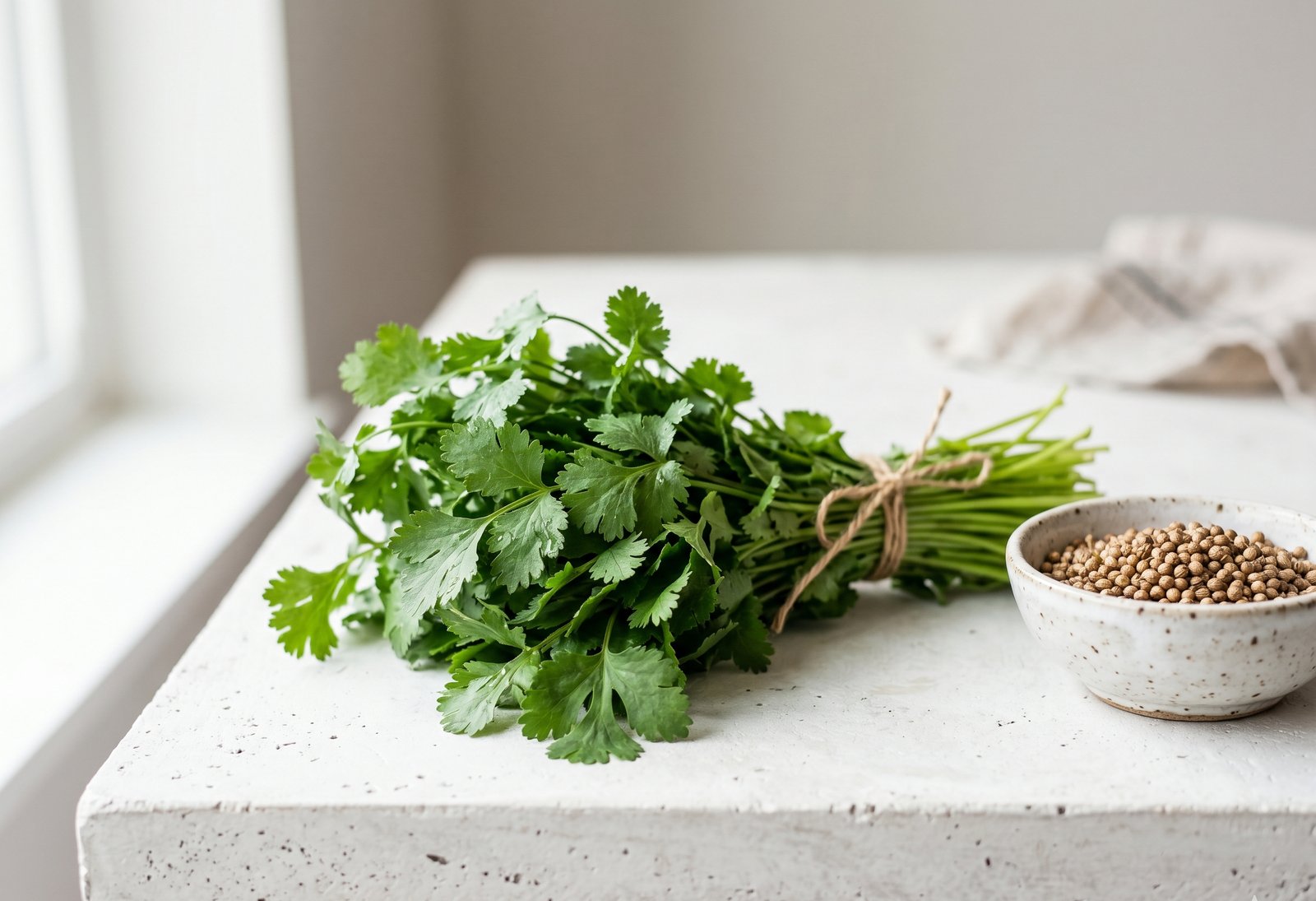
Koriandri is the herb and spice derived from the plant Coriandrum sativum (C. sativum), a member of the Apiaceae family, known across the world as coriander, cilantro, dhania, or Chinese parsley. Koriandri is one of the most popularly used spices in culinary traditions worldwide, and its medicinal value has been recognized since ancient times. C. sativum contains bioactive phytochemicals that account for a wide range of biological activities including antioxidant, anticancer, neuroprotective, anxiolytic, hypolipidemic, hypoglycemic, hypotensive, antimicrobial, and anti-inflammatory activities.
Koriandri offers 4 major health benefits: rich antioxidant activity, heart health support, improved digestion, and a strong nutritional profile of vitamins and minerals including Vitamin K, Vitamin A, Vitamin C, iron, magnesium, and manganese. The plant serves 2 distinct culinary roles — fresh cilantro leaves deliver a bright, citrusy flavor used in Mexican salsa, Indian green chutney, and Middle Eastern zhug, while dried coriander seeds provide a warm, nutty spice used in garam masala, curry powder, and spice rubs.
Koriandri has 4 main parts used in cooking and medicine: the leaf, seed, stem, and root. The fresh leaves (cilantro) and dried coriander seeds are the most widely used. The plant grows to roughly 50 centimeters (20 inches) tall and produces small, spherical fruits that become coriander seeds when dried. This guide covers everything about koriandri — from its ancient origins and health benefits to growing Koriandri herbs at home, storing fresh Koriandri, and Koriandri medicinal properties used in traditional medicine.
What Is Koriandri?
Koriandri is the herb Coriandrum sativum, an annual plant in the Apiaceae family, known in English as coriander, and in North America as cilantro for its fresh leaves. Cilantro and coriander come from the same plant but are used differently depending on location. In the United States, “cilantro” refers to the fresh leaves and stems, while “coriander” refers to the dried seeds. In Europe and many other parts of the world, “coriander” describes the entire plant — both the leaves and the seeds.
All parts of the plant are edible — the leaves, stems, seeds, and roots. The term “koriandri” is the word for coriander used in several European languages, including Estonian and Finnish, and it represents the same botanical and culinary plant recognized globally.
Origins and History
Koriandri is an annual herb native to the Mediterranean and North Africa. The leaves and seeds of coriander (Coriandrum sativum) contain high levels of protein, fiber, essential minerals, and vitamins. Its culinary and medicinal use spans from ancient civilizations to the Ottoman palace cuisine and modern global gastronomy, demonstrating that the plant has long been valued across different cultures.
Seeds have been discovered in ancient Egyptian tombs, including that of Tutankhamun. The Romans used koriandri to preserve meat and flavor bread, spreading the plant across Europe as they expanded their empire. From the Mediterranean, koriandri traveled along ancient trade routes to India, China, and the Americas. With deep roots in ancient cultures, koriandri is cherished in cuisines worldwide, including Indian, Latin American, Caribbean, French, Greek, and North African dishes.
Botanical Classification
Koriandri belongs to the Apiaceae family alongside parsley, carrots, and celery. Koriandri is a soft, hairless plant growing to 50 cm (about 20 inches) tall. The leaves are variable in shape, broadly lobed at the base of the plant, and slender and feathery higher on the flowering stems. After flowering, the plant produces small, spherical fruits. When dried, those fruits become the coriander seeds used as a spice.
The Many Names of Koriandri
Koriandri carries different names depending on the region and the part of the plant referenced. In North America, “cilantro” (from the Spanish cilantro in Spanish) refers specifically to the fresh leaves of Coriandrum sativum, while “coriander” refers to its dried seeds. In India and South Asia, the plant is called dhania. Dhania coriander is central to Indian cooking, used in curries, chutneys, and spice blends like garam masala. In many parts of Asia, the fresh leaves are called Chinese parsley, reflecting both the herb’s resemblance to flat-leaf parsley and its prevalence in Chinese culinary traditions. Outside North America, “coriander” covers the full plant — leaves, seeds, and ground powder alike.
Health Benefits
Koriandri delivers 4 primary categories of health benefits: antioxidant protection, heart health support, digestive aid, and essential nutrition. 4In traditional remedies, coriander was used for relief of gastrointestinal maladies. Current uses being investigated include its antioxidant, antimicrobial, diabetes-modulating, and neurological benefits.
Rich in Antioxidants
Coriander (*Coriandrum sativum* L.) contains abundant antioxidants and essential oils which can provide antibacterial, antifungal, and antioxidant activities in the pharmaceutical, health, and food production industry.The key antioxidants in koriandri include terpinene, quercetin, and tocopherols. Coriander is rich in antioxidants, including quercetin, terpinene, and tocopherols, which neutralize free radicals and reduce oxidative stress. Phenolic compounds found in plants have potent antioxidant and anti-inflammatory properties. A literature analysis of the polyphenols produced by Coriandrum sativum L. shows that they protect cells and the body from oxidative stress, which can contribute to aging and degenerative diseases. A diet high in these antioxidants links to a reduced risk of chronic diseases including heart disease and certain cancers.
The extracts and essential oils of coriander have exhibited antibacterial, antioxidant, free radical, antidiabetic, anticancer, and antimutagenic activities.
Supports Heart Health
Studies suggest coriander may protect heart health by lowering blood pressure and LDL “bad” cholesterol, while increasing HDL “good” cholesterol. As a diuretic, coriander may help flush excess sodium from the body, reducing blood pressure. Research suggests that coriander seeds may help lower LDL (bad) cholesterol and raise HDL (good) cholesterol, both important markers of cardiovascular health. Populations that traditionally consume diets rich in coriander and other spices tend to have lower rates of heart disease. Researchers have found that coriander works like an antispasmodic drug, relaxing the contracted digestive muscles that cause the discomfort of irritable bowel syndrome (IBS) and other “overactive gut” disorders. That same relaxing effect — working on arteries — may be one reason why the spice can help lower blood pressure.
Promotes Healthy Digestion
Oil extracted from coriander seeds has been found to promote and accelerate healthy digestion. The seeds stimulate the secretion of digestive enzymes and juices, helping the body break down food more efficiently. This is one reason why coriander seeds are commonly added to dishes that are heavy or rich, particularly legume-based meals, where they help reduce the likelihood of bloating and gas. In an eight-week clinical study involving 32 people with irritable bowel syndrome (IBS), participants who took a coriander-containing herbal preparation three times daily reported a significant reduction in abdominal pain, bloating, and general discomfort compared to those in the placebo group.
Nutritional Profile
Koriandri is low in calories but dense in essential nutrients. Cilantro is packed with vitamins A, C, and K, along with important minerals like potassium, calcium, iron, and magnesium. Green biomass of coriander is rich in vitamins, especially ascorbic acid and carotene.
According to the U.S. Department of Agriculture (USDA), the nutritional value of raw coriander leaves per 100 grams (3.5 oz) includes:
| Nutrient | Amount | % Daily Value (DV) |
|---|---|---|
| Vitamin K | 310 mcg | 258% |
| Vitamin A | 6,748 IU | 135% |
| Vitamin C | 27 mg | 30% |
| Manganese | 0.4 mg | 19% |
| Iron | 1.8 mg | 10% |
| Energy | 20 kcal (84 kJ) | — |
| Carbohydrates | 4 g | — |
| Protein | 2 g | — |
Coriander seeds contain additional minerals including iron, magnesium, and manganese. Coriander vegetative parts such as leaves and stems present the greatest nutritional and health-promoting benefits due to their relatively high polyphenol content.
Culinary Applications
It serves 2 distinct culinary roles — fresh cilantro leaves for finishing and garnishing, and dried coriander seeds as a warm spice for cooking. The green, young coriander leaves, also known as cilantro, and the aromatic coriander fruit or seed find uses in curry meat dishes, poultry and seafood dishes, a variety of ethnic foods, puddings, breads, soups, and stews.
Using Fresh Koriandri Leaves (Cilantro)
Fresh Koriandri leaves carry a bright, citrusy, and slightly peppery flavor. For some people, genetic variations in olfactory-receptor genes cause fresh cilantro to taste soapy instead. For those who enjoy the flavor, fresh cilantro adds a cooling finish to rich or spicy dishes. Fresh cilantro leaves are best added at the end of cooking to preserve their flavor and color.
3 primary uses for fresh Koriandri leaves:
- Garnish — Sprinkle chopped fresh cilantro over tacos, soups, curries, and noodle dishes just before serving.
- Sauces and Dips — Fresh leaves are a key ingredient in Mexican salsa, Indian green chutney, and Middle Eastern zhug.
- Marinades — Blend cilantro with garlic, lime juice, and oil for a flavorful marinade for chicken, fish, or tofu.
Using Koriandri Seeds (Coriander Spice)
Coriander seeds come from the plant’s dried, spherical fruits. The flavor profile of seeds is completely different from the leaves — warm, nutty, and spicy with a note of citrus. Toasting whole seeds in a dry pan before grinding intensifies the aroma and depth of flavor.
4 primary uses for koriandri seeds:
- Spice Blends — Ground coriander is a core component of garam masala, curry powder, and berbere.
- Rubs and Seasonings — Use koriandri coriander in dry rubs for roasted meats and vegetables, particularly alongside a cumin coriander blend, turmeric, and chili.
- Pickling and Brining — Whole coriander seeds go into pickling brines for cucumbers, carrots, and other vegetables, including salted Koriandri brine recipes.
- Baking — In European traditions, ground coriander flavors bread, cakes, and cookies — a use reflected in search queries like koriandri leib (coriander bread).
Flavor Pairings
Coriander pairs well with cumin, garlic, lime, chili, onion, tomato, coconut milk, and ginger. It complements proteins including chicken, lamb, fish, lentils, and beans, and vegetables including potatoes, cauliflower, carrots, and bell peppers.
Global Culinary Uses
- Mexico and Latin America — Fresh cilantro is essential in Mexican salsa, guacamole, tacos, and soups.
- India and South Asia — Dhania coriander appears in curries, garam masala, and Indian green chutney.
- Southeast Asia — Thai, Vietnamese, and Chinese cuisines use the leaves as a garnish and in soups.
- Middle East — Fresh leaves appear in zhug, falafel, and tabbouleh; seeds flavor breads and meats.
- Europe — Coriander seeds flavor sausages, pickled vegetables, and baked goods.
Growing Koriandri at Home
Growing it’s herbs at home is straightforward when the plant’s cool-weather preference is respected. Koriandri is low-maintenance, relatively pest-resistant, and easy to grow, making it ideal for gardeners of all skill levels.
Choosing the Right Time and Location
Koriandri (*Coriandrum sativum*) is a cool-season annual with a biological trigger: temperatures above 75°F (24°C) initiate flowering within days. Spring and autumn are usually the best seasons for planting koriandri, especially when temperatures remain moderate. It thrives in full sun — ideally 4 to 6 hours of direct light per day. In very hot climates or during summer, partial shade in the afternoon helps prevent bolting and keeps the leaves from becoming bitter.
Soil and Seed Preparation
It prefers fertile, well-draining soil with a slightly acidic to neutral pH between 6.2 and 6.8. Loosen the soil and enrich it with compost or organic matter before planting to improve drainage and fertility.It does not transplant well once established due to its taproot. Sow koriandri seeds directly where you plan to grow them. Plant seeds about 1/4 to 1/2 inch (0.6–1.3 cm) deep. Thin seedlings early to give each plant space — about 6 inches (15 cm) apart for healthy development.
Step-by-Step Koriandri Planting Guide
- Choose seeds — Purchase organic Koriandri seeds or coriander seeds from a garden center. Seeds sold for cooking can also be planted.
- Select a location — Pick a spot with full sun to light shade. Use Koriandri in clay pots with drainage holes for container growing.
- Prepare the soil — Use well-draining soil with a pH of 6.2–6.8. Mix in compost for garden beds.
- Sow seeds — Plant 1/4 to 1/2 inch (0.6–1.3 cm) deep. Space rows 12 inches (30 cm) apart. Water gently after planting.
- Water consistently — The plant thrives in well-draining soil rich in organic matter and requires regular watering to keep the soil consistently moist but not waterlogged.
- Harvest leaves — Harvest koriandri leaves once plants reach around 10–15 cm (4–6 inches) tall, usually about 3–4 weeks after sowing.
- Harvest seeds — Harvest koriandri seeds once the seed heads turn brown and dry, usually 2–3 months after planting.
Preventing Bolting
Bolting is the most common challenge when growing Koriandri herbs. 27To prevent bolting, grow koriandri in cooler temperatures, provide some shade in hot climates, keep the soil consistently moist, and harvest leaves regularly. Plant successive crops every 2–3 weeks for a continuous supply.
Delay bolting by harvesting regularly, choosing slow-bolt seed varieties, interplanting with taller crops for shade, and succession planting every few weeks for a continuous supply.
Pest and Disease Prevention
Common koriandri pests include aphids, spider mites, and whiteflies. Neem oil and beneficial insects can help manage them naturally. Ensure good air circulation between plants and avoid overhead watering to prevent powdery mildew and other fungal diseases.
Storage and Preparation
Storing fresh Koriandri correctly extends its usable life from a few days to several weeks. There are 3 main forms to store: fresh leaves, dried seeds, and ground koriandri powder.
Storing Fresh Koriandri Leaves
Wash leaves, spin dry, then store upright in a jar with 1 inch of water. Cover loosely with a plastic bag in the fridge. Change the water every 2 days — stored this way, the leaves last 2–3 weeks. Never seal fresh koriandri in airtight containers, as trapped moisture causes rot. For longer storage, chop leaves and freeze in olive oil cubes.It’s tea benefits come from steeping dried leaves or seeds. To make koriandri seemne tee (coriander seed tea), crush 1 teaspoon (5 g) of seeds, steep in boiling water for 10 minutes, and strain before drinking.
Storing Koriandri Seeds (Dried Coriander Spice)
Allow seed heads to dry completely on the plant, then collect and store the seeds in an airtight container in a cool, dry place. Whole seeds retain their flavor longer than ground koriandri pulber (coriander powder). Grind seeds just before use for maximum koriandri aroma and flavor.
Preparing Koriandri for Cooking
3 key preparation tips for cooking with Koriandri:
- Toast seeds before grinding — Place whole coriander seeds in a dry pan over medium heat for 1–2 minutes until fragrant. This deepens the flavor profile of seeds significantly.
- Add fresh leaves last — Fresh koriandri leaves lose their bright flavor quickly with heat. Add leaves at the end of cooking or after serving.
- Use a koriandri pestle grinding rhythm — For koriandri pesto or spice pastes, grind with steady, circular pressure in a mortar to release essential oils evenly.
Medicinal and Traditional Uses
It’s medicinal properties have been documented across 3 major traditional medicine systems: Ayurveda, Traditional Chinese Medicine (TCM), and traditional Iranian medicine. In traditional remedies, coriander was used for relief of gastrointestinal maladies, although other historical uses included as an aphrodisiac, antibiotic, a remedy for respiratory ailments and pain, and a treatment for loss of appetite and memory.
Ayurveda and Traditional Chinese Medicine
In Ayurveda, it is used as a digestive aid, a detoxifying herb, and a remedy for skin conditions. Traditional Chinese Medicine uses koriandri to promote digestion, improve appetite, and address measles. Both systems value koriandri essential oil for its antimicrobial and soothing properties, used in topical applications for skin health.
Koriandri Tea Benefits
It’s seemne tee (coriander seed tea) is a traditional preparation used to soothe digestive discomfort. Coriander seeds contain antioxidant properties and dietary fiber which support healthy liver function and facilitate bowel movements. Coriander assists in the generation of digestive compounds and facilitates digestion.
Koriandri Essential Oil
The major volatile compound of coriander essential oil is β-linalool at 66.07%. Coriander essential oil radical scavenging activity was 51.05% of inhibition. It’s essential oil is used in aromatherapy for its calming properties and in topical formulations for its antimicrobial activity.
Blood Sugar and Metabolic Support
In a clinical study, coriander seeds remarkably increased serum total antioxidant capacity (TAC) and decreased serum malondialdehyde (MDA) levels compared to the baseline and the placebo group. Compounds in coriander seeds enhance insulin function and glucose metabolism. Individuals managing blood sugar levels should consult a healthcare professional before using koriandri therapeutically, as it is not a substitute for medical treatment.
Safety and Precautions
It is safe for most people in typical culinary amounts. There are 3 precautions to note:
- Some individuals experience allergic reactions, particularly those sensitive to other Apiaceae family members like parsley or celery.
- Excessive consumption may cause digestive discomfort in some individuals.
- Koriandri may interact with medications affecting blood sugar or blood pressure — consult a healthcare professional if this applies.
Different Types of Coriander
There are 3 main categories of koriandri varieties: leaf coriander, seed coriander, and related coriander-like herbs.
Leaf vs. Seed Coriander Varieties
Leaf Coriander (Slow-Bolt Varieties) — These cultivars are bred to produce abundant foliage for a longer period before flowering. Slow-bolt varieties are best for harvesting fresh Koriandri leaves continuously. Choose slow-bolt seed varieties and interplant with taller crops for shade to delay bolting and extend fresh leaf production.
Seed Coriander — Other varieties are grown specifically for their large, flavorful seeds. These plants bolt more quickly but produce a higher yield of dried Koriandri spice. European coriander seeds are spherical in shape and more flavorful because of their higher concentration of volatile oils. Indian coriander is more egg-shaped and contains some oils not found in European coriander, resulting in a more lemony scent.
Fresh vs. Dried Koriandri
Fresh koriandri leaves carry a bright, pungent, citrusy flavor. This flavor diminishes quickly with heat, so fresh leaves work best added at the end of cooking or as a garnish.
Dried koriandri — Dried cilantro leaves lose most of their flavor and are not an effective substitute for fresh. Dried and ground coriander seeds, however, have a warm, nutty, and spicy profile that works well in long-simmered dishes, spice blends, and rubs.
Regional Coriander Varieties and Similar Herbs
Vietnamese Coriander (Persicaria odorata) — Not a true koriandri plant, but its flavor is similar to cilantro with a more potent, peppery character. It holds up better to heat than standard cilantro and is widely used in Southeast Asian cuisine.
Culantro (Eryngium foetidum) — Another herb with a cilantro-like flavor, but significantly stronger. Culantro has long, serrated leaves and resists heat far better than cilantro, making it ideal for soups and stews across Latin America and South Asia.
You Might Also Like: Crocolini
Frequently Asked Questions (FAQs) About Koriandri
1. Is koriandri the same as coriander?
Yes, it is the same plant as coriander. It is the term used for Coriandrum sativum in several European languages, including Estonian. The English term “coriander” refers to both the plant and its seeds.
2. What is the difference between koriandri and cilantro?
(Koriandri vs cilantro) In North America, “cilantro” refers to the fresh leaves of Coriandrum sativum, while “coriander” refers to its dried seeds. Cilantro and coriander come from the same plant but are used differently. In the United States, “cilantro” refers to the fresh leaves and stems, while “coriander” refers to the dried seeds. In Europe and many other parts of the world, “coriander” describes the entire plant — both the leaves and the seeds.
3. What does koriandri taste like?
(Koriandri maitse) Koriandri leaves taste bright, citrusy, and slightly peppery. It’s seeds taste warm, nutty, and spicy with notes of citrus. The two flavor profiles are completely different despite coming from the same plant.
4. Why do some people think cilantro tastes like soap?
This is a genetic trait. Specific olfactory-receptor genes make certain people sensitive to aldehyde compounds in cilantro, the same compounds found in soap. This genetic variation means the soapy perception is not a matter of preference but of biology.
5. What is koriandri kaste (koriandri sauce)?
Koriandri kaste is a sauce or dressing made with fresh koriandri leaves. Common versions include Indian green chutney (blended cilantro, green chili, ginger, and lemon juice), Mexican salsa verde, and Middle Eastern zhug. Koriandri pesto blends fresh leaves with garlic, olive oil, lemon juice, and nuts.
6. What are the health benefits of koriandri? (Koriandri kasulikkus)
Health benefits from coriander seeds include lowering blood sugar, cholesterol, and blood pressure, as well as protecting against food poisoning and digestive problems. It also supplies Vitamin K, Vitamin A, Vitamin C, iron, magnesium, and manganese, and its antioxidants help combat free radicals linked to chronic diseases.
7. How do I grow koriandri at home? (Koriandri kasvatamine)
Grow koriandri in cooler temperatures, harvest leaves regularly, and provide shade during very hot weather to slow bolting. Sow organic Koriandri seeds directly into well-draining soil with a pH of 6.2–6.8, water consistently, and plant in succession every 2–3 weeks for a continuous harvest.
8. How do I store fresh koriandri? (Koriandri säilitamine)
Store fresh koriandri stems upright in a jar with 1 inch (2.5 cm) of water, cover the leaves loosely with a bag, and refrigerate. Change the water every 2 days. For longer storage, freeze chopped leaves in olive oil cubes. Store dried koriandri seeds in an airtight container in a cool, dry place.
9. What is dhania?
Dhania is the Hindi and Swahili name for koriandri. Dhania coriander is used daily in Indian and South Asian cooking, appearing in curries, garam masala, and Indian green chutney. The term covers the fresh leaves, seeds, and ground koriandri powder.
10. What is koriandri in English? (Koriandr in English)
It in English is coriander. The fresh leaves are also called cilantro in English, particularly in North American usage. Other English names include Chinese parsley for the leaves.
11. What are koriandri võrsed (coriander shoots)?
Koriandri võrsed are young coriander sprouts or microgreens, harvested within 1–2 weeks of germination. Another quick and easy option is to grow koriandri as microgreens on a sunny windowsill, harvesting whole seedlings after only a few weeks. Koriandri võrsed have a milder flavor than mature leaves and make a clean garnish for salads and soups.
12. How is koriandri used in traditional medicine? (Koriandri kasutamine)
C. sativum contains bioactive phytochemicals that account for a wide range of biological activities including antioxidant, anxiolytic, anticonvulsant, analgesic, migraine-relieving, hypolipidemic, hypoglycemic, and anti-inflammatory activities. In Ayurveda, koriandri is used to support digestion, detoxify the body, and improve skin health. Koriandri tinctures and koriandri tea are common traditional preparations.Koriandri — known globally as coriander, cilantro, dhania, and Chinese parsley — stands as one of the world’s most complete culinary herbs. It is the only common plant that delivers two entirely different flavors from a single source: the fresh, citrusy brightness of its leaves and the warm, nutty depth of its dried coriander seeds. It’s health benefits span antioxidant protection, heart health, digestion support via digestive enzymes, and a strong supply of Vitamin K, Vitamin A, Vitamin C, iron, magnesium, and manganese.
Cooking with it is versatile — fresh Koriandri leaves work in Mexican salsa, Indian green chutney, and Middle Eastern zhug, while dried Koriandri spice elevates garam masala, curry powder, and dry rubs. Growing Koriandri at home requires only cool temperatures, well-draining soil, consistent watering, and succession planting every 2–3 weeks. Storing fresh Koriandri is simple: stems in water, loosely covered, refrigerated. Koriandri medicinal properties, recognized in Ayurveda, Traditional Chinese Medicine, and modern research published through the National Institutes of Health (NIH) and the U.S. Department of Agriculture (USDA), confirm centuries of traditional use.
From koriandri seeme (seeds) to koriandri lehed (leaves), from koriandri tee (tea) to koriandri kaste (sauce), this ancient herb continues to shape kitchens and health practices across the Mediterranean, North Africa, India, China, the Americas, and beyond.